
This guide covers the whole subject from the contract up: the specifications and how to read them, what one lot costs for each common strategy, the Greeks of the strikes you are likely to trade, how far Nifty usually moves before an expiry, buying versus selling, weekly versus monthly, a complete rule set and a worked week on one lot, margin and charges, position sizing, a weekly routine, and how to run a Nifty strategy as an algo bot in QuantPower. If you are looking for Nifty option trading for beginners, read the first four sections and the buying section in order; the rule set, margin and automation sections assume you have those down.
Nifty option trading at a glance
| Feature | Nifty 50 options |
|---|---|
| Underlying | Nifty 50 index, NSE |
| Lot size | 65 units, from the January 2026 series |
| Strike interval | 50 points near the money, 100 points further out |
| Expiries | Weekly, every Tuesday; monthly on the last Tuesday of the month |
| Style and settlement | European, cash-settled at the final settlement price |
| Trading hours | 9:15 am to 3:40 pm, since 3 August 2026 |
| Capital to buy one ATM option | The premium: about ₹18,200 for a call or ₹14,800 for a put, 12 days out |
| Margin to sell one ATM straddle | Roughly ₹1.5 to 1.8 lakh, depending on the broker and the day |
| Model one-standard-deviation move | About 183 points in a day, 635 in 12 days, 1,003 in 30 days |
| Main risks | Gaps on events, a fall in implied volatility for buyers, unlimited loss on naked short options |
| Difficulty | Beginner for buying single options and spreads; intermediate for selling |
Key takeaways
- One lot is 65 units, so every point of premium is ₹65. The at-the-money call 12 days before expiry costs about ₹280, or ₹18,231 a lot, and the put about ₹227, or ₹14,762.
- An at-the-money straddle is worth about 508 points with 12 days left, 327 points with 5 days left and 146 points on the morning of expiry. Time decay runs at about 22 points a day at 12 days and 35 points a day at 5 days.
- The model gives a 68% chance that Nifty finishes within 635 points of 25,000 in 12 days, and a 58% chance that it finishes between a short straddle's breakevens of 24,492 and 25,508.
- Vega is the hidden cost for buyers. A one-point fall in IV takes about 18 points, or ₹1,170 a lot, off the at-the-money call.
- Charges on one lot are small next to the premium: about ₹90 for a long call round trip, ₹173 for a straddle and ₹259 for a four-leg iron condor at ₹20 brokerage per order. They matter when a strategy trades every day.
- Since November 2024, Nifty 50 is NSE's only index with weekly expiries, so weekly strategies on NSE concentrate in this one contract.
How Nifty options work
A Nifty option is a contract on the level of the Nifty 50 index. A call pays its holder the amount by which Nifty finishes above the strike at expiry; a put pays the amount by which it finishes below. Both pay in cash, because the index has no shares to deliver. Before expiry the option trades at a price that includes that intrinsic value plus time value, which depends on how long is left and how much the market expects Nifty to move.
| Specification | Detail | Why it matters |
|---|---|---|
| Lot size | 65 units | Every ₹1 of premium is ₹65 a lot; every index point against a short position is ₹65 a lot |
| Strike interval | 50 points near the money | Spreads are built in 50-point steps: a 25,000/25,300 spread is six intervals wide |
| Weekly expiry | Tuesday | A new weekly contract becomes the front expiry every Wednesday morning |
| Monthly expiry | Last Tuesday of the month | The monthly contract is also the weekly for that week |
| Settlement | Cash, at the final settlement price | No shares change hands and there is no early exercise |
| Minimum contract value | ₹15 lakh at introduction, under SEBI's November 2024 measures | The reason the lot grew from 25 to 65 |
| Trading hours | 9:15 am to 3:40 pm | The index stops moving with trades at 3:15 pm, when the closing auction in its stocks begins |
Two practical points follow. First, a Nifty option can never be assigned early and never results in a share delivery, so a short option's worst case is a cash loss, not an unwanted position in stock. Second, NSE revises lot sizes and has changed expiry days several times, so check the current contract specifications and the Nifty expiry date before building rules around a day of the week.
If calls, puts, strikes and premiums are new to you, start with what options trading is and the beginner's guide, then come back here.
What one lot costs: the strikes you will trade
Model values with Nifty at 25,000, 12 days to expiry, implied volatility (IV) of 14% and an interest rate of 6.5%. Rupee figures are for one lot of 65.
| Strike | Call premium | Call per lot | Call delta | Put premium | Put per lot | Put delta | Vega (1 IV point) | Call decay per day |
|---|---|---|---|---|---|---|---|---|
| 24,700 | ₹466.13 | ₹30,298 | 0.72 | ₹113.40 | ₹7,371 | −0.28 | 15.4 | −12.1 |
| 24,800 | ₹398.30 | ₹25,890 | 0.66 | ₹145.36 | ₹9,448 | −0.34 | 16.6 | −12.6 |
| 24,900 | ₹336.33 | ₹21,861 | 0.60 | ₹183.18 | ₹11,907 | −0.40 | 17.5 | −12.8 |
| 25,000 | ₹280.48 | ₹18,231 | 0.54 | ₹227.11 | ₹14,762 | −0.46 | 18.0 | −12.8 |
| 25,100 | ₹230.87 | ₹15,007 | 0.48 | ₹277.29 | ₹18,024 | −0.52 | 18.1 | −12.6 |
| 25,200 | ₹187.48 | ₹12,186 | 0.41 | ₹333.68 | ₹21,689 | −0.59 | 17.7 | −12.1 |
| 25,300 | ₹150.11 | ₹9,757 | 0.35 | ₹396.11 | ₹25,747 | −0.65 | 16.9 | −11.4 |
How to read the table:
- Delta is how many points the option moves for a one-point move in Nifty. The 25,000 call gains about 0.54 points, or ₹35 a lot, for each point Nifty rises. Delta is also a rough probability: the 25,300 call, with a delta of 0.35, has roughly a one-in-three chance of finishing in the money.
- Vega is the change for a one-point change in IV. It is largest at the money, about 18 points or ₹1,170 a lot. If IV falls from 14% to 13% on a quiet day, the at-the-money call loses about as much as it would gain from a 33-point rise in Nifty.
- Decay per day is theta. Every strike in the table loses 11 to 13 points a day at this distance from expiry, and the rate rises as expiry approaches.
- Calls cost more than puts at the same distance because the model includes the 6.5% interest rate, which shifts the forward price above the spot. Real market prices also carry skew: puts below the market often trade at a higher IV than calls above it, because traders pay up for crash protection.
How far Nifty usually moves before expiry
The model's one-standard-deviation move is the index level × IV × √(days ÷ 365). With Nifty at 25,000 and IV at 14%:
| Horizon | One standard deviation | Range covering about 68% of outcomes | Range covering about 95% of outcomes |
|---|---|---|---|
| 1 day | About 183 points | 24,817 to 25,183 | 24,634 to 25,366 |
| 5 days | About 410 points | 24,590 to 25,410 | 24,180 to 25,820 |
| 12 days | About 635 points | 24,365 to 25,635 | 23,730 to 26,270 |
| 30 days | About 1,003 points | 23,997 to 26,003 | 22,994 to 27,006 |

This is the number every Nifty strategy is built around. A short straddle at 25,000 collects about 508 points, so it profits at expiry if Nifty finishes between 24,492 and 25,508: 0.8 standard deviations either side, which the model puts at about a 58% chance. An iron condor with short strikes at 24,750 and 25,250 and 250-point wings breaks even at 24,611 and 25,389, about a 46% chance of finishing inside, in exchange for a capped loss. A long call at 25,000 needs Nifty above 25,280 at expiry to profit, a move of 0.44 standard deviations, which happens roughly a third of the time.
Two cautions. The model assumes a normal, well-behaved market and IV that stays put; real Nifty moves have fatter tails, and the biggest moves cluster around events. And the figure is only as good as the IV you put in. India VIX, NSE's measure of the 30-day volatility implied by Nifty options, is the quickest check: when VIX is at 11, the 12-day move is about 500 points; at 20, it is about 905 points.
Choosing a strategy by market view
Nifty option trading strategies divide first by market view and then by whether they buy or sell premium. Match the view, then pick the side you can afford to be wrong on:
| Your view | Buying strategies | Selling strategies |
|---|---|---|
| Strongly bullish | Long call | Short put (unlimited risk below the strike) |
| Moderately bullish | Bull call spread | Bull put spread |
| Strongly bearish | Long put | Short call (unlimited risk above the strike) |
| Moderately bearish | Bear put spread | Bear call spread |
| Big move, direction unknown | Long straddle, long strangle | — |
| Range-bound | — | Short straddle, short strangle, iron fly, iron condor |
Buying strategies have a known maximum loss, the premium, and need Nifty to move further than the premium before expiry. Selling strategies collect the premium and profit if Nifty moves less than that; the naked versions can lose far more than they collect, so most automated selling strategies either add wings or carry strict stops.
The numbers on one lot, from the same model:
| Strategy | Legs | Cost or credit per lot | Maximum profit | Maximum loss | Breakeven at expiry |
|---|---|---|---|---|---|
| Long call | Buy 25,000 call | ₹18,231 paid | Unlimited | ₹18,231 | 25,280 |
| Long put | Buy 25,000 put | ₹14,762 paid | ₹1,610,238 (Nifty at zero) | ₹14,762 | 24,773 |
| Bull call spread | Buy 25,000 call, sell 25,300 call | ₹8,474 paid | ₹11,026 | ₹8,474 | 25,130 |
| Bear put spread | Buy 25,000 put, sell 24,700 put | ₹7,391 paid | ₹12,109 | ₹7,391 | 24,886 |
| Short straddle | Sell 25,000 call and put | ₹32,993 received | ₹32,993 | Unlimited | 24,492 and 25,508 |
| Short strangle | Sell 25,300 call and 24,700 put | ₹17,128 received | ₹17,128 | Unlimited | 24,436 and 25,564 |
| Iron fly | Short straddle plus 24,700 put and 25,300 call bought | ₹15,865 received | ₹15,865 | ₹3,635 | 24,756 and 25,244 |
| Iron condor | Sell 24,750 put and 25,250 call, buy 24,500 put and 25,500 call | ₹9,051 received | ₹9,051 | ₹7,199 | 24,611 and 25,389 |
Spreads cost less than single options and break even closer to the current price, at the cost of a capped profit. Wings cap a seller's loss at the cost of premium: the iron fly keeps about half the straddle's credit and turns an unlimited loss into ₹3,635. Build any of these in the option profit calculator to see the payoff and today's value side by side.
Buying Nifty options
Buyers pay the premium and nothing more. In exchange they fight time decay every day they hold, and they are exposed to IV.
- Long calls and puts give the most leverage for a strong view with a near-term trigger. The 25,000 call gains ₹3,641 a lot if Nifty rises 120 points the next day, and ₹9,776 if it rises 300 points in three days. It loses ₹7,322 if Nifty falls 150 points over the same three days, and ₹2,339 if Nifty stands still while IV falls two points.
- Debit spreads sell a further strike against the one bought. The bull call spread above costs ₹8,474 against ₹18,231 for the call alone, breaks even 150 points closer, and gives up everything above 25,300.
- Long straddles and strangles buy both sides for a large move in either direction. They suit the days before a known event, if IV has not already risen to price it in. The long straddle guide has the rules.
Automated buying strategies usually enter on a signal that confirms momentum, such as a break of the opening range or a VWAP cross on Nifty futures, and exit fast when the move fails. They also tend to avoid buying after a sharp rally, when IV is high and likely to ease. The option buying strategy guide covers signal design, and IV crush shows what happens to a bought option when volatility falls.
Selling Nifty options
Sellers collect the premium and profit if Nifty stays inside the range the premium implies. They earn time decay every day and are hurt by large moves and rising IV.
- Short straddles sell the at-the-money call and put and collect the most premium per lot, about 508 points.
- Short strangles sell out-of-the-money strikes for a wider range and less premium.
- Iron flies and iron condors add bought wings that cap the loss and cut margin.
- Credit spreads sell one side only for a mild directional view with a defined loss.
Selling without wings needs margin and discipline. A short straddle on one lot ties up roughly ₹1.5 to 1.8 lakh, and a 2% move in Nifty against it, about 500 points, wipes out the entire credit.
Weekly vs monthly Nifty options
Nifty has one weekly expiry every Tuesday and a monthly expiry on the last Tuesday, so there are always several expiries to choose from. The difference is mostly time:
| Weekly, 5 days left | Weekly, 12 days left | Monthly, 30 days left | |
|---|---|---|---|
| ATM call | ₹174.72 | ₹280.48 | ₹469.35 |
| ATM put | ₹152.47 | ₹227.11 | ₹336.14 |
| ATM straddle | 327 points | 508 points | 805 points |
| Straddle decay per day | About 35 points | About 22 points | About 14 points |
| One-standard-deviation move | About 410 points | About 635 points | About 1,003 points |
| Gamma | High, and rising fast | Moderate | Low |
| Suits | Intraday and expiry-week trades | Short positional trades, weekly condors | Positional trades, adjustments, hedges |
Weekly options give sellers faster decay and buyers a cheaper ticket, and both sides more expiries per year to trade and test. Their final days carry the highest gamma, which is when a short option can lose a day's decay in a few minutes. Monthly options cost more, decay more slowly and leave more room for a strategy to recover or be adjusted. Many traders sell weeklies and hedge with monthlies, or buy monthlies for directional views that may take a fortnight to play out.
On expiry day itself, the at-the-money straddle opens at about 146 points and loses most of that by the afternoon. Short index options also attract an additional 2% extreme loss margin on expiry day under SEBI's November 2024 measures. Our hero zero option trading guide covers the whole session.
Intraday vs positional Nifty strategies
Intraday strategies open and close on the same day, often within a fixed window such as 9:20 am to 3:10 pm. They avoid overnight gaps, carry no overnight margin and are easy to supervise. Examples include a 9:20 short straddle with per-leg stops, the opening range breakout on Nifty futures with an option bought on the break, and VWAP strategies. Very short holds, measured in minutes, belong to the scalping strategy guide.
Positional strategies hold from a few days to a few weeks. They capture more decay or a larger move, but carry overnight and event risk, need margin through volatile sessions and can gap past a stop. Weekly iron condors, debit spreads held into an event and monthly covered positions are typical.
Most automated Nifty books mix the two: intraday strategies with strict daily limits for the bulk of the trades, and a smaller positional book in defined-risk structures.
A complete Nifty rule set
A strategy is a list of exact rules. Here is one for a positional seller, used in the worked example below. It is a template for how the rules should be written, not a recommendation.
- Instrument and expiry. Nifty 50 options, the weekly expiry 12 days away, entered on a Thursday.
- Filter. Enter only if India VIX is between 11 and 18 and no RBI policy decision, Union Budget or election result falls before the expiry.
- Structure. Sell the 25-delta call and put, roughly 250 points either side of the index, and buy the strikes 250 points further out. Choose strikes by delta at the entry time, not by a fixed distance.
- Size. One lot per ₹2 lakh of capital allocated to the strategy.
- Entry. 10:00 am, by limit orders at the mid price, with the hedges placed first so the margin benefit applies.
- Profit target. Close the whole position when it can be bought back for half the credit received.
- Stop. Close the whole position when the loss reaches the credit received, or when Nifty closes beyond either short strike, whichever comes first.
- Adjustment. None. One structure, one exit.
- Time exit. Close on the Monday before expiry at 3:00 pm if neither the target nor the stop has triggered, to avoid expiry-day gamma.
- Account limit. A daily MTM stop loss across all strategies that squares everything off.
The same discipline applies to a buying rule set: instrument and expiry, the signal, the strike, the order type, the target, the stop, the time exit and the account limit. QuantPower's strategy builder has a field for each of them.
A worked week on one lot
The iron condor from the table, run under the rules above. Prices come from the model as Nifty and IV change; this is an illustration of the mechanics, not a record of results.
- Thursday, 10:00 amNifty at 25,000, IV 14%, VIX inside the filter, no scheduled events before expiry. Sell the 24,750 put at ₹128.65 and the 25,250 call at ₹168.05; buy the 24,500 put at ₹65.35 and the 25,500 call at ₹92.10. Net credit 139.25 points, or ₹9,051. Target: buy back at 69.6 points. Stop: a loss of 139.25 points, or a close beyond 24,750 or 25,250.
- Monday, closeNifty has rallied to 25,180 and IV has ticked up to 15%. The condor is worth 138.23 points. The position is up ₹67 after three days: the rally has eaten almost all the decay. Nothing triggers.
- Thursday, closeNifty has drifted back to 25,090 and IV has eased to 13%. The condor is worth 98.13 points, a gain of 41 points or ₹2,673. Still short of the target.
- SaturdayNo trading. The weekend's two days of decay come through at Monday's open.
- Monday, 10:15 amNifty at 24,960 with two days to expiry and IV at 13%. The condor is worth 70.43 points, inside a point of the target. The bot buys back all four legs at the mid for 70.40. Profit 68.85 points, or ₹4,475 before charges.
- Monday, 10:16 amPosition flat. Charges on the eight orders come to about ₹259, so the net gain is about ₹4,216 on roughly ₹55,000 to ₹65,000 of margin, held for 11 days.
Now the same rules on a different week. Nifty falls 300 points to 24,700 by Monday and IV jumps to 16%. The condor is worth 146.52 points, a loss of ₹472 so far, and Nifty is below the short put strike. Rule 7 closes the position at the Monday close for a loss of about ₹472 plus ₹259 of charges, about ₹731. Had the rules allowed the position to run and Nifty kept falling to 24,560 with IV at 17%, the loss by Thursday would have been about ₹797, and in a crash it would have reached the maximum of ₹7,199.
Three things stand out. The profit came mostly from the second week, when decay accelerated and IV eased; the first three days earned almost nothing. The stop on a close beyond the short strike cut the losing week off at under 10% of the maximum loss. And the four-leg structure paid ₹259 in charges each way, about 3% of the credit, which is affordable for a trade held 11 days and expensive for one closed the same afternoon.
Margin for Nifty option sellers
Buyers pay the premium and no margin. Sellers post SPAN margin, which covers the exchange's estimate of a one-day loss across a range of price and volatility scenarios, plus exposure margin, plus the additional 2% extreme loss margin on expiry day for short index options. Approximate figures for one lot, which vary by broker and by day:
| Position | Approximate margin | Why |
|---|---|---|
| Long call or put | None beyond the premium | The loss is limited to the premium paid |
| Short straddle | ₹1.5 to 1.8 lakh | Unlimited loss either side; SPAN covers a large move |
| Short strangle | ₹1.4 to 1.7 lakh | Slightly less than the straddle, as the strikes are further out |
| Iron fly or iron condor | ₹50,000 to 70,000 | The bought wings cap the loss, and SPAN gives a hedge benefit |
| Bull put or bear call credit spread | ₹25,000 to 40,000 | One side only, loss capped by the bought strike |
Three rules of thumb. Place the bought legs before the sold legs, so the hedge benefit applies at entry rather than after. Keep a margin buffer, because SPAN rises when VIX rises, and the broker will square off positions that fall short. And never size from the margin figure: it is the exchange's minimum deposit, not an estimate of what you can lose. Our F&O margin calculator explains SPAN and exposure, and hedge margin benefit shows how wings cut the requirement.
Start your free trial
Connect your broker, build a strategy and test it on paper before a single live order goes out.
Charges on Nifty options
Each order pays brokerage, exchange transaction charges, the SEBI fee and GST; each sale pays STT at 0.15% of the premium; each purchase pays stamp duty. At ₹20 brokerage per order and the model prices above, one lot in and out:
| Strategy | Orders | Approximate charges per round trip | As a share of premium or credit |
|---|---|---|---|
| Long call, 25,000 | 2 | ₹90 | 0.5% of ₹18,231 |
| Short straddle | 4 | ₹173 | 0.5% of ₹32,993 |
| Iron condor, 250-point wings | 8 | ₹259 | 2.9% of ₹9,051 |
Charges are small against the premium for a position held days, and large for a strategy that trades daily: an intraday iron condor every session pays about ₹5,200 a month in charges per lot before slippage. Put your broker's rates into the calculator and into every backtest.
Brokerage, STT, exchange charges, SEBI fee, stamp duty and GST for one round trip, by broker.
Profits from options are generally taxed as non-speculative business income.
Position sizing for Nifty options
Size from the loss you are prepared to take on one trade, not from the margin and not from the premium. Suppose the limit is ₹20,000 per trade:
| Strategy | Risk per lot | Lots within ₹20,000 |
|---|---|---|
| Long call with a 30% premium stop | About ₹5,470 | 3 |
| Bull call spread, 25,000/25,300 | ₹8,474 | 2 |
| Iron condor, 250-point wings, stop at the credit | ₹9,051 | 2 |
| Iron fly, 300-point wings | ₹3,635 | 5 |
| Short straddle with 25% per-leg stops, both legs stopped | About ₹8,250 | 2 |
The straddle figure assumes both stops fill at their trigger prices. Gaps and fast markets can make the real loss much larger, so many traders size naked positions more conservatively than the table suggests, or trade the iron fly instead. The position size calculator does these sums for any structure.
A second limit sits above the per-trade one. With ₹5 lakh of capital and a daily loss limit of 2%, every strategy running on the account together may lose ₹10,000 in a day before the MTM stop loss squares everything off.
What moves Nifty
- Heavyweights. Banks and financial services, IT and energy companies carry the largest weights, so bank results and IT guidance move the index more than their count suggests.
- Global cues. Overnight moves in US markets and the morning in Asia often show up as an opening gap, which matters most for positional sellers.
- Domestic events. RBI policy, the Union Budget, inflation prints, GDP data and election results. These are the days option buyers wait for and sellers skip.
- Flows. Foreign and domestic institutional buying and selling, reported daily after the close.
- Expiry dynamics. Large open interest at round strikes tends to anchor the index near expiry. The Nifty option chain shows where that interest sits.
Sensex options on BSE expire on Thursdays and the two indices move almost in step, so Nifty and Sensex positions on the same side add to the same exposure. Bank Nifty is more volatile, with a model one-standard-deviation move of about 1,625 points over 12 days at 56,000 and IV 16%, and has only monthly expiries. Our guides to Sensex option trading and Bank Nifty cover their differences.
A weekly routine for Nifty option traders
- Wednesday morning: the new weekly contract is the front expiry. Check the event calendar for the next two weeks, note India VIX and look at where open interest is building on the option chain.
- Choose the week's strategies: selling structures if VIX is in its normal range and no event falls before expiry; spreads or bought options if VIX is low or an event is due.
- Set the limits: per-trade risk, lots per strategy and the account's daily MTM limit, before the first order.
- Thursday to Monday: let the automated strategies run on their rules. Review fills, slippage and rejected orders each evening; do not change rules mid-week.
- Monday afternoon: close positional structures that are not designed to be held into expiry.
- Tuesday, expiry: run only expiry-day strategies, at smaller size.
- Tuesday evening: record the week in the trade journal: each trade, each fill against the plan, and anything the rules did not anticipate.
Setting up a Nifty strategy in QuantPower
Every rule above maps to a setting. Using the positional iron condor as the example:
| Rule | Example setting |
|---|---|
| Instrument | Nifty options, weekly expiry, 12 days out |
| Legs | Sell 25-delta call and put; buy the strikes 250 points further out |
| Strike selection | By delta at entry |
| Entry | Thursday, 10:00 am, limit orders at the mid |
| Filter | India VIX between 11 and 18; skip event weeks |
| Profit target | 50% of the credit |
| Stop loss | 100% of the credit, or a close beyond a short strike |
| Time exit | Monday before expiry, 3:00 pm |
| Lots | 1 per ₹2 lakh allocated |
| Account limit | Daily MTM loss limit |
Step 1. Build the structure
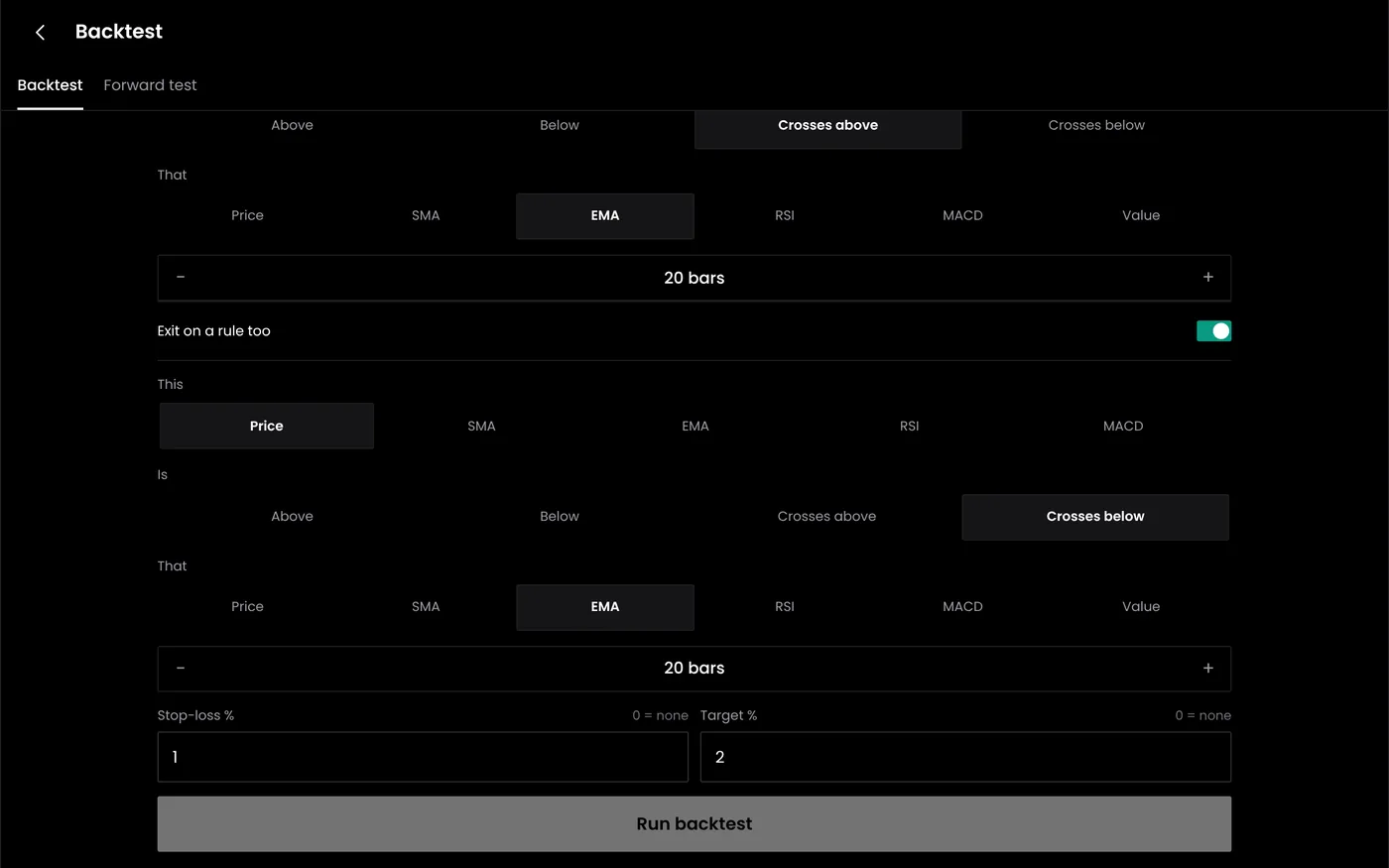
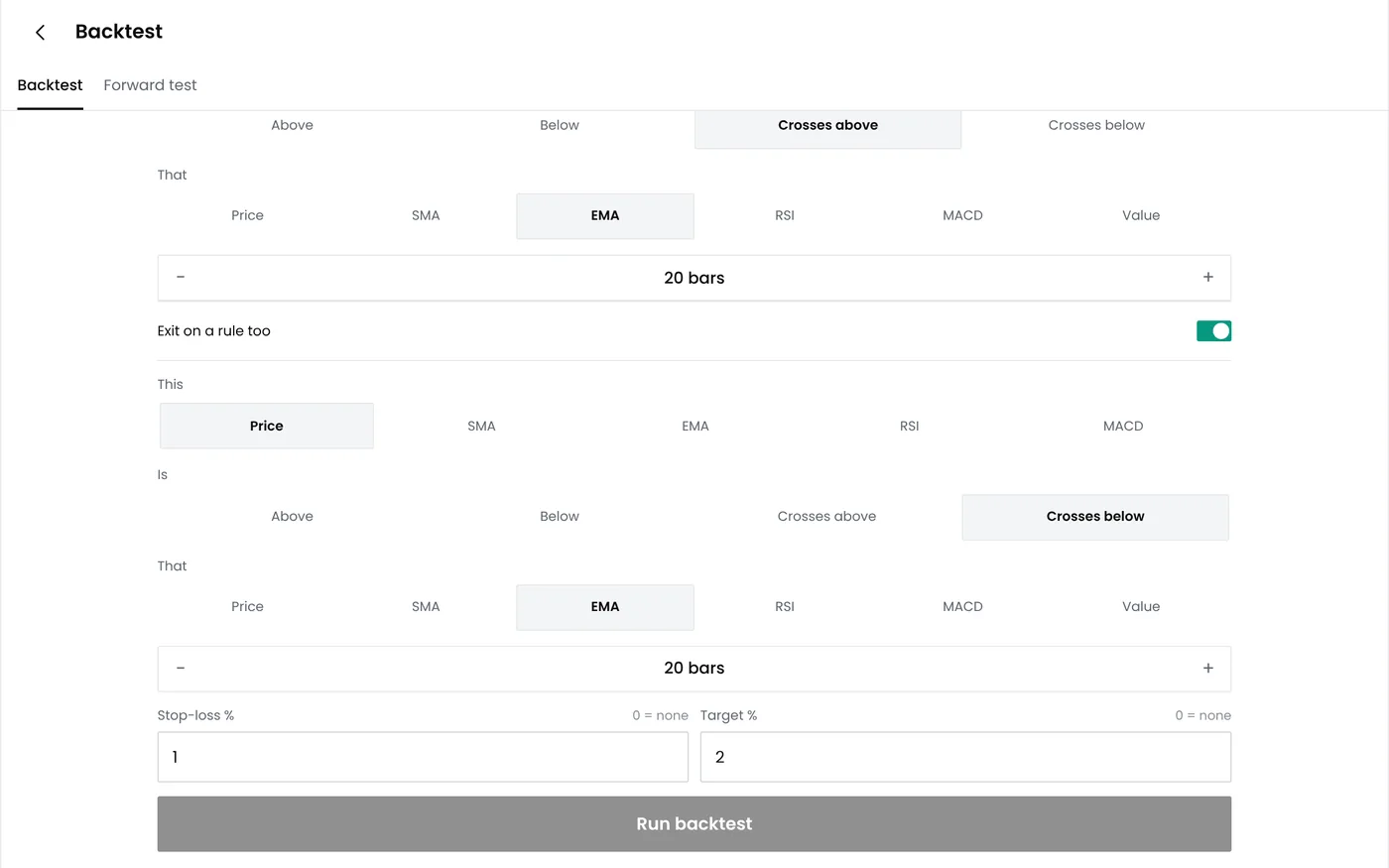
In the strategy builder, choose Nifty weekly options and add the four legs with delta-based strike selection. The builder shows the payoff, the credit and the Greeks before you save.
Step 2. Set the entry, exits and filters
Add the Thursday 10:00 am entry, the VIX filter, the 50% target, the stop and the Monday time exit.
Step 3. Backtest it
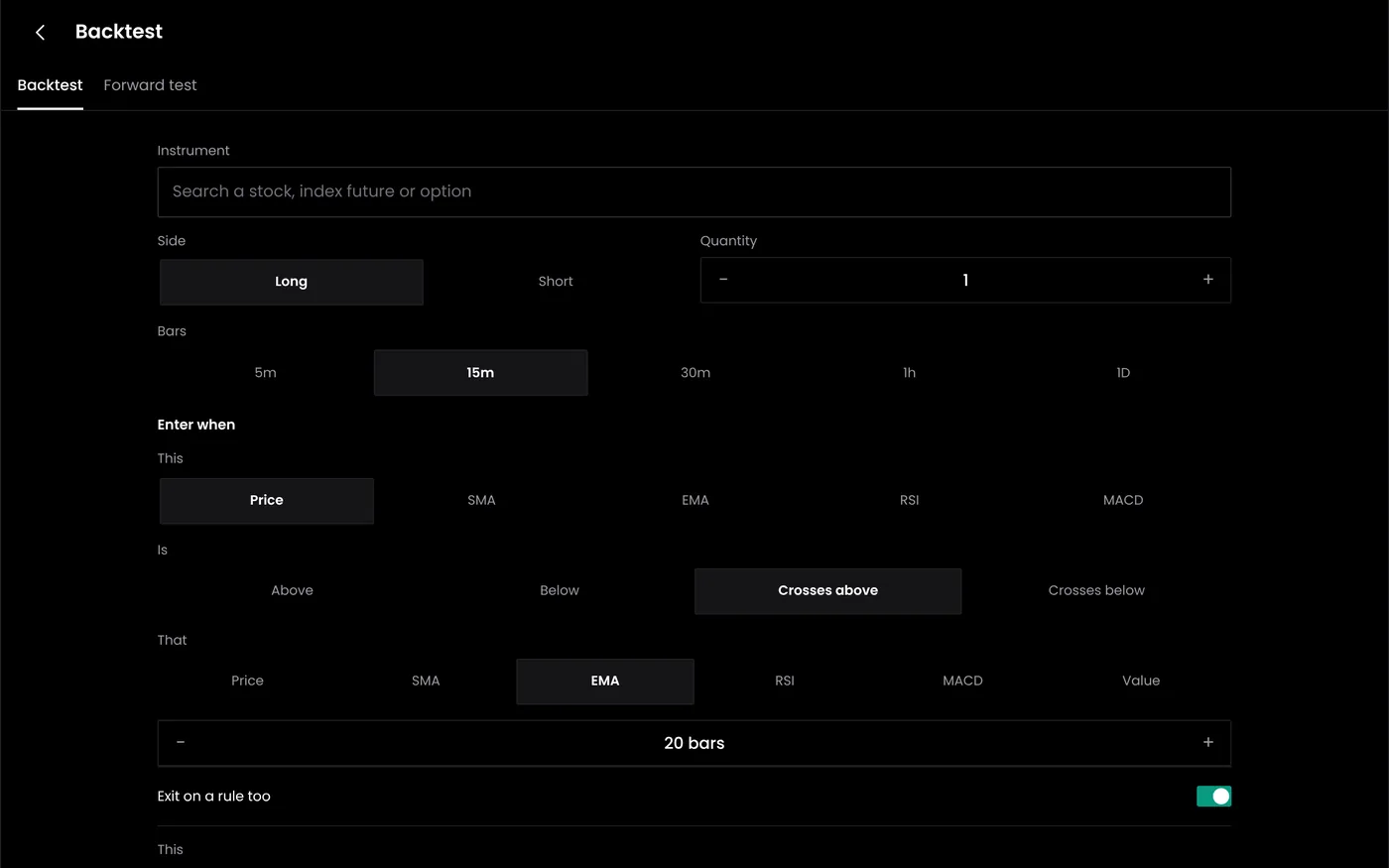
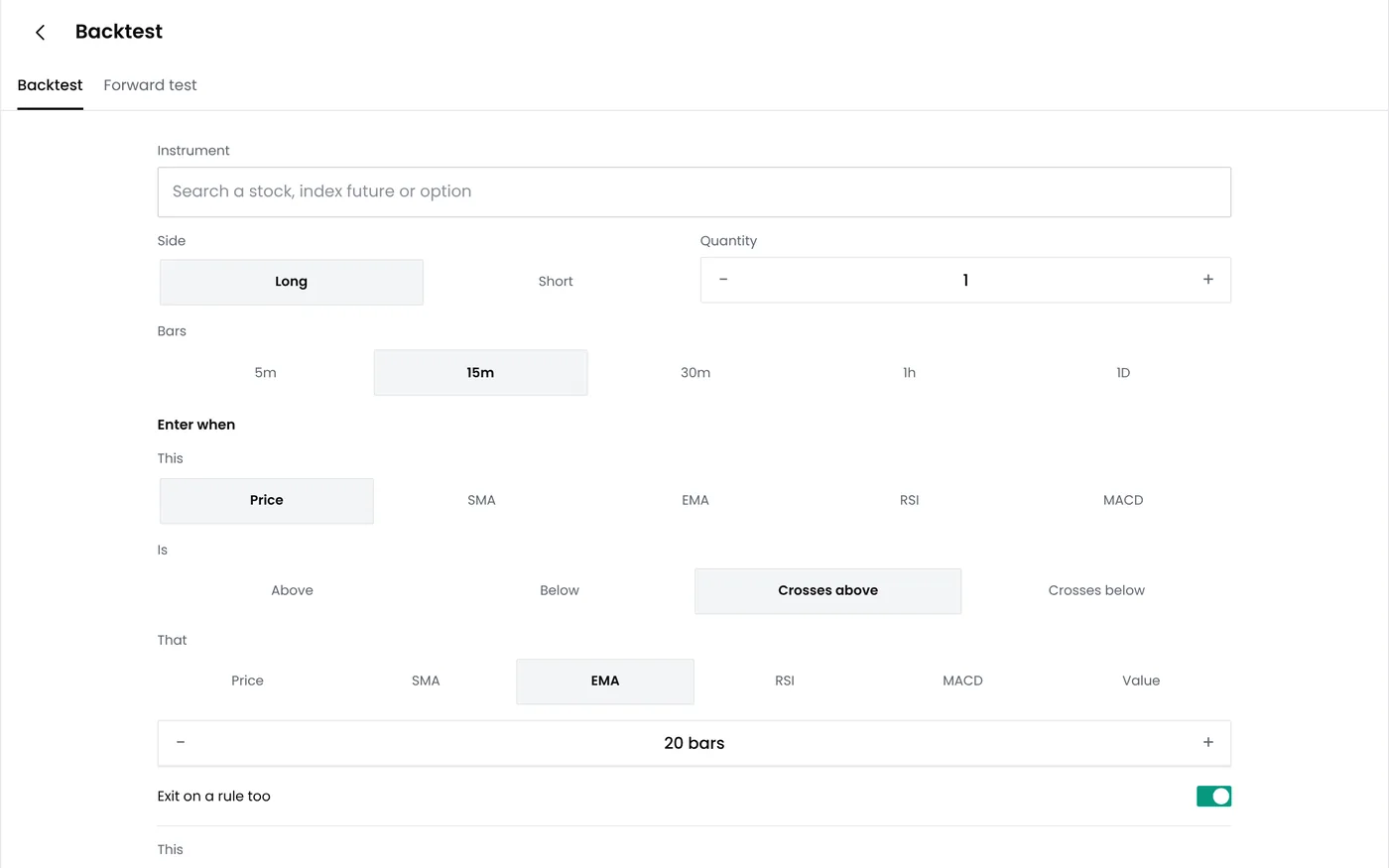
Run the rules over past expiries with charges and slippage on. Check the result on event weeks separately, and change one setting at a time: the delta, the wing width, the target.
Step 4. Paper trade it
Run the strategy on live prices with virtual money for several expiries. Compare each fill with the mid price the backtest assumed; four-leg structures can slip more than the model suggests.
Step 5. Set the account limit
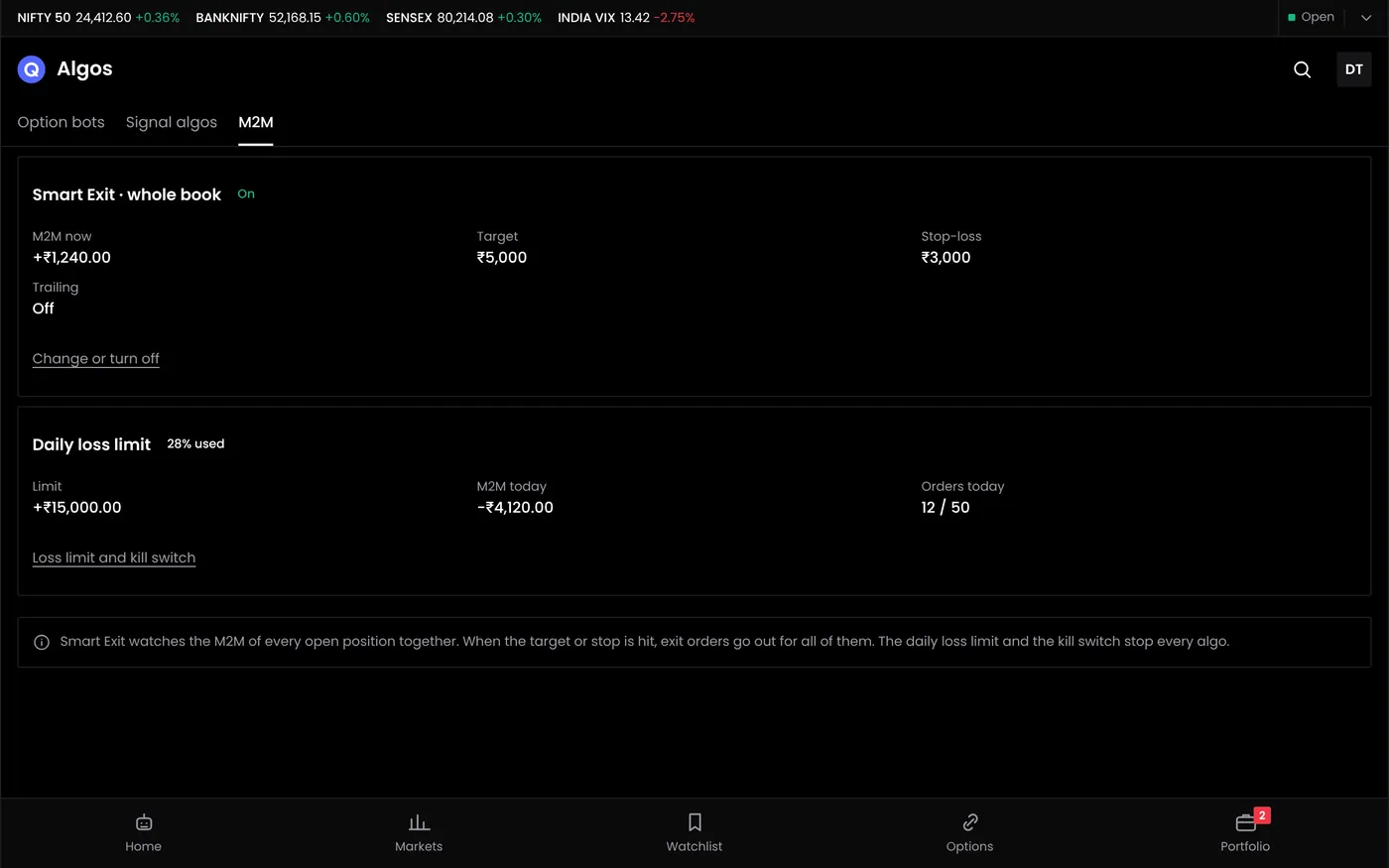
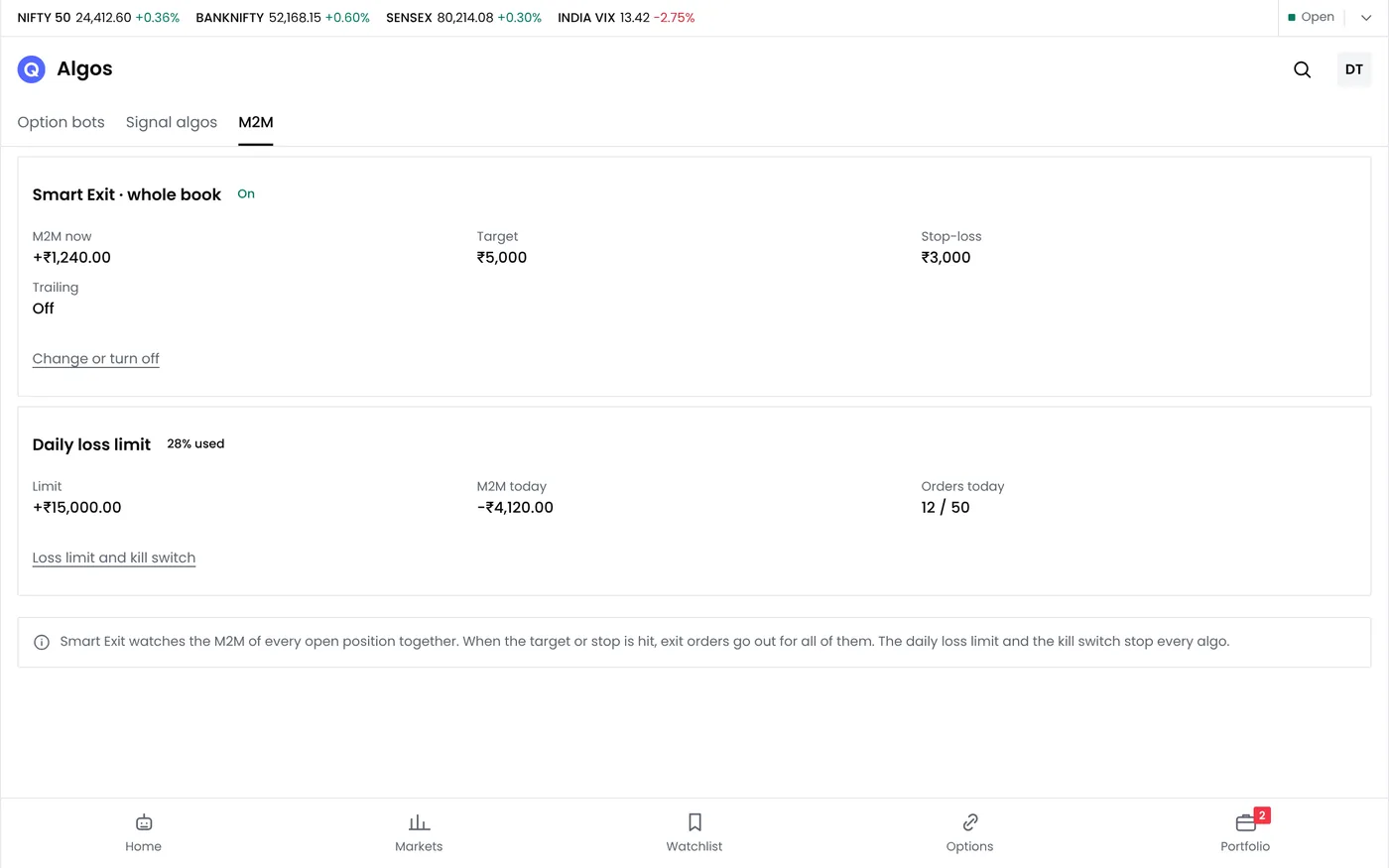
Set the daily MTM loss limit in the risk settings before going live. It squares off every position when hit, including positions from other strategies.
Step 6. Deploy the bot
Connect your broker, choose the strategy and the number of lots, confirm the limits and deploy. The bot places the hedges first, then the short legs, and watches the target, the stop and the time exit. Orders go through your connected broker under the requirements applicable to your strategy and account; a named example is not a claim of strategy approval.
Step 7. Monitor and review
Watch the first weeks closely: fills, margin used, any rejected orders. Pause all bots from one button if the market does something the rules did not anticipate.
Measuring a Nifty options strategy
| Measure | What to look for |
|---|---|
| Net result per trade | Positive after charges and slippage, across at least 30 expiries |
| Win rate against the model's probability | A short structure with a 58% model probability should win at least that often after stops |
| Worst week and longest losing run | Both inside the daily and weekly limits you set |
| Result on event weeks | Separately from quiet weeks; the filter should have skipped most of them |
| Margin used against capital | A buffer that survives a VIX spike |
| Fills against the mid price | The gap is slippage; large gaps mean the backtest flattered the strategy |
Common mistakes in Nifty option trading
- Selling naked options into events such as RBI policy, the Union Budget or results day for a heavyweight.
- Buying far out-of-the-money weeklies because they are cheap. A 25,500 call costs ₹92 and has a one-in-four chance of finishing in the money.
- Sizing from margin. The exchange's deposit for a straddle is about ₹1.6 lakh; the loss on a 500-point gap is ₹33,000 a lot and rising.
- Holding positional shorts into expiry afternoon, when gamma is at its highest and the additional 2% margin applies.
- Ignoring Sensex positions that add to the same market exposure.
- Using old lot sizes or expiry days in rules and backtests. The lot is 65 from the January 2026 series and the weekly expiry is Tuesday.
- Changing rules mid-week after one bad trade.
Pre-trade checklist
- You know the current lot size and the expiry date of the contract you are trading.
- You have checked India VIX and the event calendar through expiry.
- The strategy's maximum loss, or its stop, is inside your per-trade limit, and the lots follow from it.
- The target, the stop and the time exit are set before the entry order.
- Hedges are placed before short legs, and the margin buffer survives a VIX spike.
- The account's daily MTM limit is set.
- The strategy has been backtested with charges and paper traded for several expiries.
Start your free trial
Connect your broker, build a strategy and test it on paper before a single live order goes out.
Frequently asked questions
How do I start Nifty option trading?
Open a trading account with F&O enabled, learn how calls, puts, strikes and premiums work, then paper trade a simple strategy such as a bull call spread for a few expiries before risking money. Start with one lot, a written rule set and a per-trade loss limit. The option trading for beginners covers the first steps.
What is the Nifty lot size?
65 units from the January 2026 series, so every point of premium is ₹65 a lot. NSE revises lot sizes periodically to keep the contract value near its minimum, so check the current specifications before you trade.
How much money do I need for Nifty option trading?
To buy one at-the-money option 12 days before expiry, about ₹15,000 to ₹18,500 in premium. To sell an iron condor, roughly ₹50,000 to ₹70,000 of margin. To sell a naked straddle, about ₹1.5 to 1.8 lakh. In every case the capital you need is set by the loss you can afford, not by the minimum the broker allows.
When do Nifty options expire?
Weekly options expire every Tuesday and monthly options on the last Tuesday of the month, both at the close of trading. Since November 2024 Nifty 50 is the only NSE index with weekly expiries; Bank Nifty and FinNifty are monthly only. Check the Nifty expiry date for holiday changes.
Are Nifty options European or American?
European. They can only be exercised at expiry, there is no early assignment, and they settle in cash at the final settlement price.
Which strategy is best for Nifty option trading?
None is best in every market. Buying suits strong, fast moves and known events; selling suits quiet weeks; defined-risk structures suit traders who want a known maximum loss. Choose by your view, your loss limit and what your backtests show over many expiries.
Is Nifty option trading profitable?
For most individual traders it has not been: SEBI's study of FY26 found that about 88% of individual F&O traders lost money after costs. Traders who do well tend to keep strict limits, trade defined-risk structures and test rules before using them. We do not publish returns for any strategy, and nothing on this page is a performance claim.
Can I automate Nifty option trading?
Yes. Orders go through your connected broker under the requirements applicable to your strategy and account; a named example is not a claim of strategy approval. Strategies built in QuantPower run as bots on your own broker account.
Weekly or monthly Nifty options?
Weekly options for intraday and short positional trades, where fast decay helps sellers and buyers want a cheap ticket. Monthly options for views that may take weeks, for hedges and for positions you may need to adjust. Many traders use both.
Related guides and terms
- Bank Nifty, FinNifty option trading, Sensex option trading and hero zero option trading
- Option buying strategies and option selling strategies
- Short straddle strategy, short strangle strategy, iron fly strategy and iron condor strategy
- Nifty option chain, Nifty PCR and strike price selection
- Option greeks and implied volatility crush
- F&O margin calculator, position size calculator and brokerage calculator
Sources
- NSE: Equity derivatives contract specifications (lot size, strike scheme, expiry days)
- SEBI circular SEBI/HO/MRD/TPD-1/P/CIR/2024/132, 1 Oct 2024: Measures to strengthen the equity index derivatives framework (one weekly expiry per exchange, ₹15 lakh minimum contract value, additional 2% ELM on expiry day)
- SEBI circular on safer participation of retail investors in algorithmic trading, 4 Feb 2025, and the implementation timeline to 1 April 2026
- SEBI, Profitability of Individual Traders in the Equity Derivatives Segment (FY25–FY26), PR No. 50/2026, 20 August 2026
- NSE circular of 30 May 2026: equity derivatives close moved to 3:40 pm from 3 August 2026
- Finance Act, 2026: STT of 0.15% on the sale of options from 1 April 2026
- Black, F. and Scholes, M. (1973). The Pricing of Options and Corporate Liabilities. Journal of Political Economy, 81(3), 637–654